Air Quality Evidence for Workplace Wellbeing
Independent indoor air quality assessors · Since 1999
Workplace wellbeing air testing helps HR, workplace and ESG teams communicate measured indoor-environment evidence to staff and stakeholders. The assessment combines an anonymised, non-medical occupant questionnaire with monitoring selected for the building and the concerns raised. It does not diagnose individual symptoms. Instead, it shows where reported experience aligns with measurable patterns and gives property teams practical information for ventilation, source control and follow-up communication.
Established 1999 · 2,500+ assessments · SafeContractor approved · BOHS Affiliate Member · London & South East
Questions wellbeing teams need answered
A useful commission begins with the decision the organisation must make. That may be responding to recurring stuffiness comments, providing evidence for an ESG disclosure, reviewing a return-to-office environment or explaining changes after a fit-out. We agree who will use the technical report, what staff will be told and how privacy will be protected. Claims about health or productivity are not inferred from general building measurements; communication stays with the conditions observed and the actions supported by evidence.
Anonymised occupant questionnaire
A short questionnaire can identify where, when and under what circumstances people notice odours, temperature discomfort, dryness or stuffiness. Responses are collected without medical histories or personally identifying details. The pattern helps select rooms and monitoring periods, but it is not treated as proof of a source. We compare themes with occupancy, ventilation schedules, recent changes and measured data, and report only aggregated observations suitable for workplace review.
Measurement approach
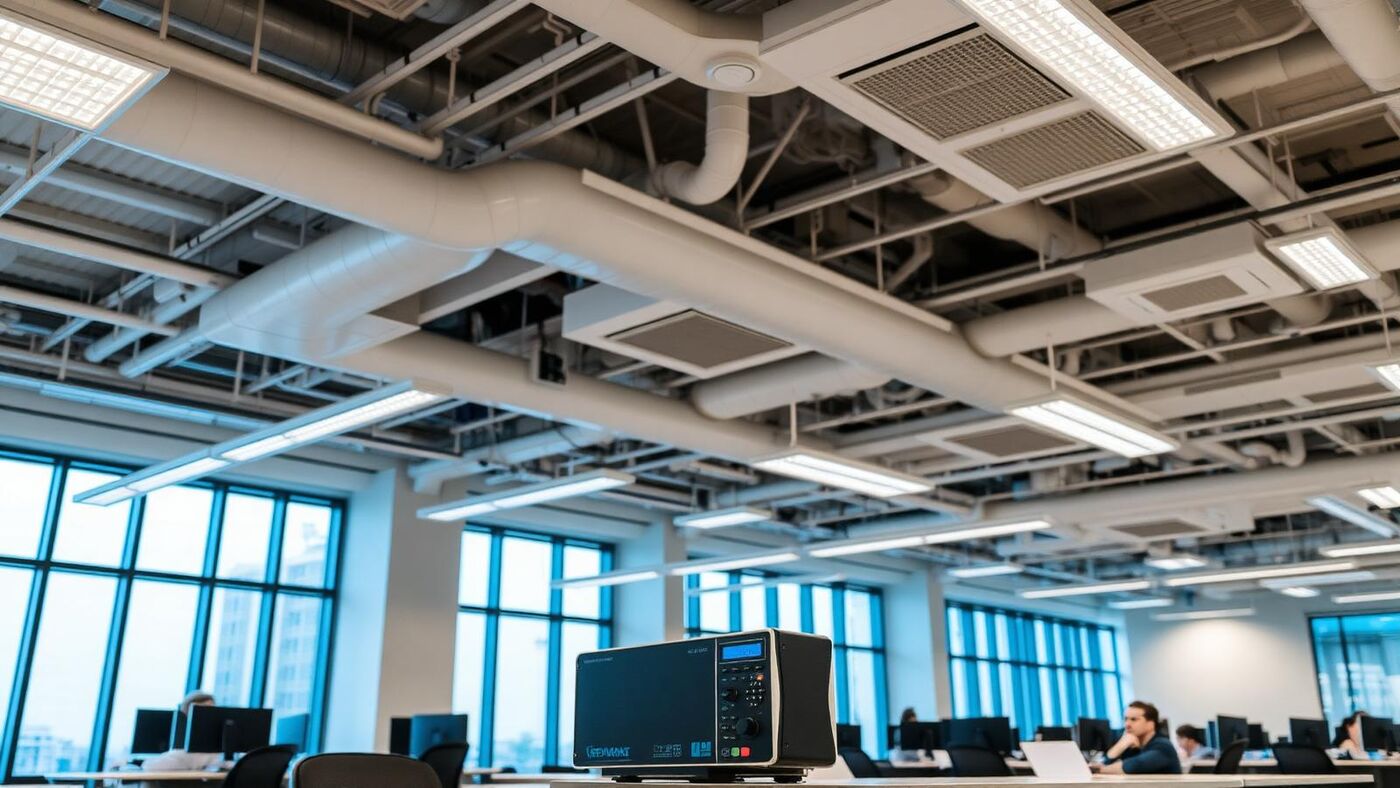
Real-time instruments can log CO₂, particulates, TVOC, temperature and relative humidity in representative occupied areas. Logging shows whether a pattern follows room use, time of day or ventilation operation. An outdoor reference can help interpret particulate or gaseous ingress. Laboratory formaldehyde or speciated VOC sampling is added when a specific material, chemical odour or project criterion warrants it. Locations are chosen from questionnaire themes and building zones, while control areas help test whether the concern is local or widespread.
Evidence for ESG and staff communication
The technical report preserves methods, locations, context and limitations for facilities and ESG records. A separate occupant-friendly summary can explain what was measured, the broad pattern found, the actions agreed and when any follow-up will occur. It avoids unexplained instrument output and avoids personal health conclusions. Where the organisation reports workplace environment activity, the summary can document the assessment and management response without turning a single survey into a permanent performance claim.
Typical follow-up actions
Actions depend on the evidence. They may include adjusting ventilation schedules, reviewing meeting-room occupancy, changing a product or storage practice, checking an outdoor-air intake, commissioning laboratory confirmation or asking the HVAC contractor to investigate controls. A targeted re-test can repeat the relevant locations after action. Where reports indicate an individual medical concern, the employer’s occupational-health route remains separate from the building assessment.
Limitations and what this assessment cannot tell you
- The questionnaire is anonymised and non-medical
- Building measurements cannot diagnose an individual health condition
- Results represent the agreed locations and occupied period
- ESG use should describe the survey scope and date rather than imply permanent conditions
What your report includes
- Workplace and communication objectives
- Aggregated questionnaire themes
- Monitoring methods, rooms and occupied periods
- Measured patterns and relevant building context
- Areas of alignment or difference between feedback and data
- Prioritised property actions
- Occupant-friendly summary and follow-up plan
Related indoor air quality services
Frequently Asked Questions
Need Indoor Air Quality Testing?
Get a no-obligation quote. We provide IAQ testing, ventilation assessment and environmental monitoring across London and the South East.