Multi-Site Indoor Air Quality Monitoring
Independent indoor air quality assessors · Since 1999
Multi-site IAQ monitoring gives organisations with several commercial buildings one controlled way to collect and interpret indoor air quality evidence. Each property keeps its own findings, yet common instruments, location rules and report fields allow the estate team to compare like with like. The programme can cover a small regional group or a phased portfolio across London and the South East, with effort directed by building category and risk rather than an identical visit frequency everywhere.
Established 1999 · 2,500+ assessments · SafeContractor approved · BOHS Affiliate Member · London & South East
One method across different buildings
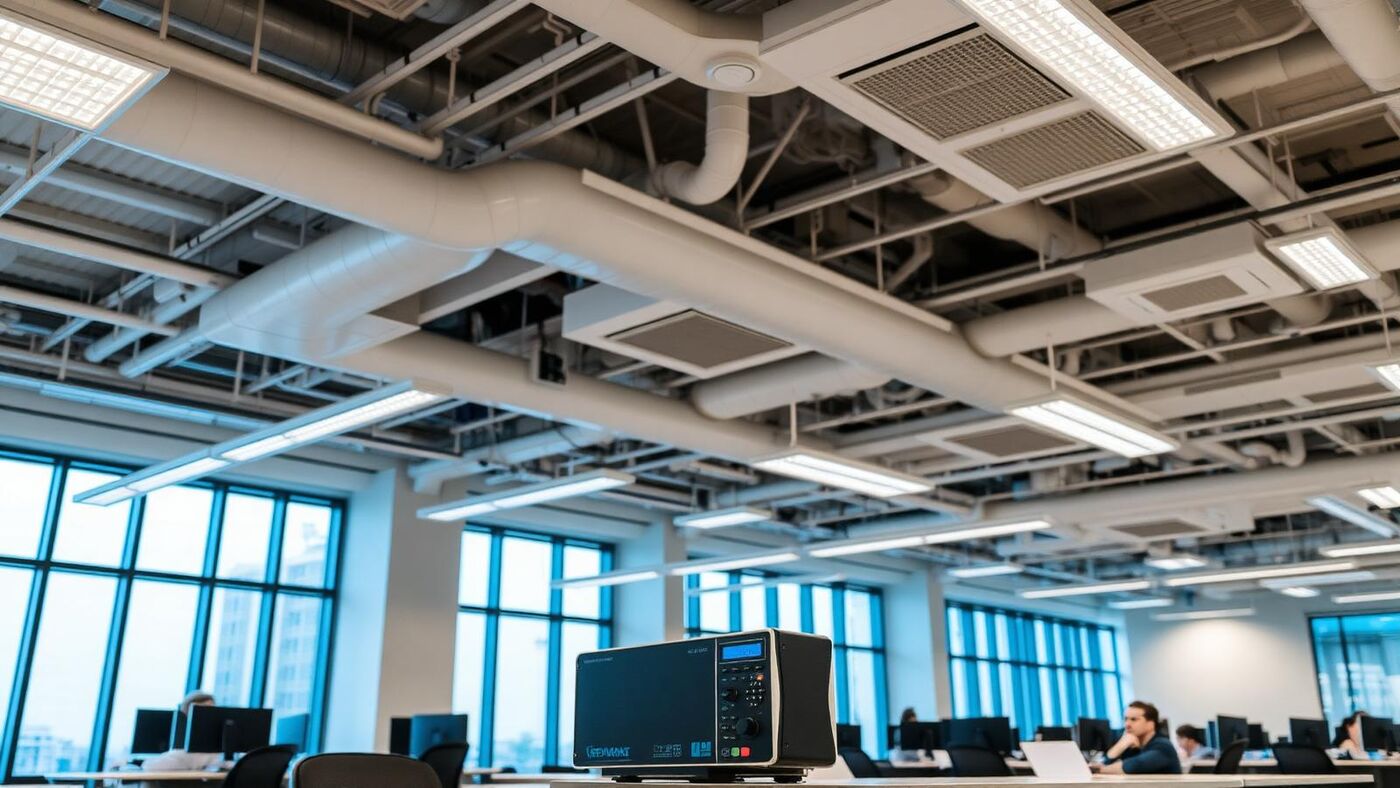
Mobilisation starts with the asset list, building uses, normal occupancies, ventilation types and available records. We create a survey protocol defining core parameters, equipment checks, representative location logic, deployment periods and report terminology. Real-time logging can cover CO₂, particulates, TVOC, temperature and humidity, while laboratory sampling is reserved for sites with a compound-specific reason. The protocol provides consistency without forcing a warehouse office, headquarters and hotel into the same room selection.
Site categories and risk-based frequency
Properties are placed into practical categories using factors such as occupancy density, complaint history, ventilation dependence, sensitive project requirements and previous findings. A higher-priority site may need an early baseline and closer review; a stable lower-risk property may suit a longer interval. Categories are documented and reviewed when buildings enter or leave the estate, undergo fit-out or show a significant exception. This makes the frequency explainable to local teams and avoids repeating low-value work merely because a calendar date has arrived.
Portfolio summary and site comparison
Every property receives a report with its methods, locations, operating context, results and limitations. The portfolio summary then groups comparable measures, highlights recurring themes and shows sites needing action or further investigation. Comparisons are made only where methods and conditions support them. Exception reporting draws attention to a material result, missing access, abnormal operating state or overdue follow-up, so central teams can act without reading every table before understanding priority.
Phased roll-out
A pilot group can test the protocol across contrasting building types before broader deployment. The first phase confirms access assumptions, reporting fields and the practical time required at each category. Later phases can be grouped geographically while preserving instrument preparation and survey quality. New sites are added through the same onboarding record, and local contacts receive a concise description of access, occupancy and documentation requirements before attendance.
Combining IAQ with ventilation hygiene PPM
Portfolio programmes can align occupied-space monitoring with independent ventilation hygiene inspection. IAQ results answer what occurred in representative rooms during the monitoring period; TR19 Air, DTT or EVT/PVT evidence describes accessible system condition. Keeping the methods distinct allows the estate team to see whether an exception points towards occupancy, outdoor ingress, a pollutant source or a ventilation hygiene concern. Mechanical performance issues are referred to the HVAC contractor.
Limitations and what this assessment cannot tell you
- Portfolio comparison requires consistent methods and sufficiently similar conditions
- A summary does not replace each building’s detailed report
- Site additions, removals and material scope changes are documented before inclusion
- Results apply to the sampled locations and deployment periods
What your report includes
- Portfolio protocol and asset categories
- Site-level methods, locations and results
- Comparable measures across suitable properties
- Exceptions, access gaps and abnormal conditions
- Priority actions with named site references
- Trend position for repeat survey rounds
- Programme recommendations for the next phase
Related indoor air quality services
Frequently Asked Questions
Need Indoor Air Quality Testing?
Get a no-obligation quote. We provide IAQ testing, ventilation assessment and environmental monitoring across London and the South East.