How Much Does Indoor Air Quality Testing Cost?
Independent indoor air quality and ventilation assessors · Since 1999
Indoor air quality testing cost follows the evidence needed. A useful quotation accounts for the number and variety of zones, parameters, monitoring period, laboratory work, access and reporting purpose. Complaint investigation differs from routine office screening or certification pre-testing. Green Air Monitoring provides a fixed quotation once the building, question and deliverables are clear, allowing clients to compare the proposed method.
Established 1999 · 2,500+ assessments · SafeContractor approved · BOHS Affiliate Member · London & South East
The main factors behind an IAQ quotation
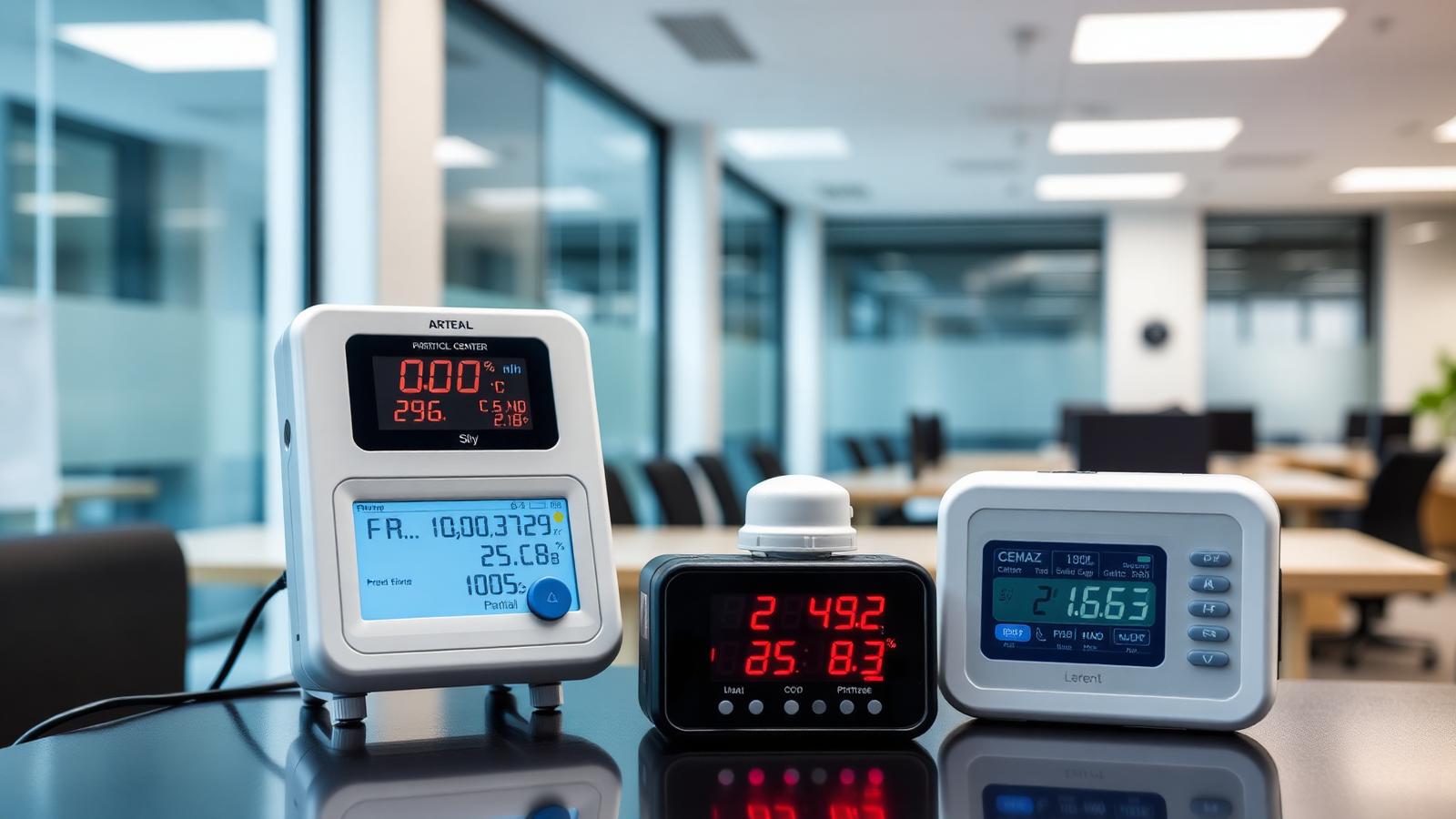
Floors and zones affect representative-location numbers, but diversity matters too. Open areas, meeting rooms, kitchens, print zones and separate systems may answer different questions. Real-time logging shows changing CO₂, particulates, TVOC and thermal conditions; specific VOCs or formaldehyde require laboratory analysis. Deployment length, repeat visits, access, out-of-hours attendance, travel and reporting also affect cost.
Survey types and their principal cost drivers
| Survey type | What's included | Main cost drivers |
|---|---|---|
| Basic screening | Defined real-time parameters at a small set of representative occupied locations | Number of rooms, visit length and breadth of parameters |
| Standard office survey | Multi-location logging, occupancy context, interpretation and a building report | Floors, zones, monitoring duration and reporting detail |
| Complaint investigation | Problem definition, comparison areas, targeted logging and source-focused inspection | Intermittency, repeat attendance, specialist parameters and investigation complexity |
| Compliance or laboratory route | Sampling and evidence selected for the applicable project requirement | Analytes, sample count, laboratory method and scheme documentation |
| Ventilation hygiene add-on | Accessible system inspection or testing alongside occupied-space evidence | Systems, access points, method, permits and out-of-hours access |
Swipe sideways to see the full table →
Real-time logging and laboratory analysis are different costs
Direct-reading instruments relate changing conditions to occupancy or ventilation operation when placement and duration suit the pattern. Laboratory analysis answers a specific chemical or microbiological question and can identify compounds that TVOC screening cannot. The scope states which method applies at each location and why.
Monitoring period, access and programme
A spot reading answers a limited question but may not represent occupied variation. Complaints that change by time, room or activity need a suitable deployment. Induction, permits, escorts, secure placement and collection affect effort. Out-of-hours visits can be arranged; travel from Bexley and programme assumptions are stated.
What to send for a fixed quotation
Clear information makes quotations easier to compare.
- Building address and the number of floors, rooms or distinct zones in scope
- The decision, complaint, audit or project requirement the testing must support
- Typical occupancy, working pattern and ventilation strategy
- Known locations, times, odours, dust or comfort concerns
- Recent fit-out, maintenance, water damage or operational changes
- Parameters or scheme criteria already specified by a consultant
- Access restrictions, permits and any need for attendance outside normal hours
- Required report audience, format and relevant programme dates
- Whether several sites or repeat surveys should be quoted together
What a low-cost scope may leave out
Check whether a quotation states duration, locations, occupied conditions, outputs, laboratory fees, interpretation and reporting. A sensor reading without context may show change but not cause; laboratory analysis without a source question may not direct action. Travel, collection, access and follow-up should be clear so scopes can be compared fairly.
Annual and multi-site arrangements
An annual agreement can combine a schedule, standard method, report format and reactive support under one fixed annual price. Multi-site work may be phased by property type or risk. Planned mobilisation creates consistency, while exceptions and additional laboratory work remain visible.
Is this the right page?
Service Agreements explains the options for planned annual support and a fixed annual scope. Office Air Quality Testing describes the measurement and reporting route for one workplace where the survey requirement is already clear.
Limitations and what this assessment cannot tell you
A fixed quotation depends on a defined scope and the building information available at enquiry stage.
- Additional locations, analytes or visits requested later may require a revised quotation
- Unknown access restrictions can change the time and method needed on site
- Screening instruments cannot replace laboratory identification where a specific compound is the question
- The lowest visit cost may not provide enough duration or coverage for the intended decision
- Contractor repair, cleaning and remedial works are outside an assessment quotation
What the quoted reporting scope can include
Deliverables are identified before commissioning so the evidence matches its audience.
- Agreed question, parameters and representative-location schedule
- Instrumentation, sampling methods and monitoring periods
- Laboratory analysis specified by sample and analyte
- Charts, contextual observations and result interpretation
- Limitations and prioritised recommended actions
- Portfolio or annual summary where included in the agreement
Related indoor air quality services
Frequently Asked Questions
Need Indoor Air Quality Testing?
Get a no-obligation quote. We provide IAQ testing, ventilation assessment and environmental monitoring across London and the South East.