Independent indoor air quality assessors · Since 1999
Commercial Dust and Particulate Monitoring
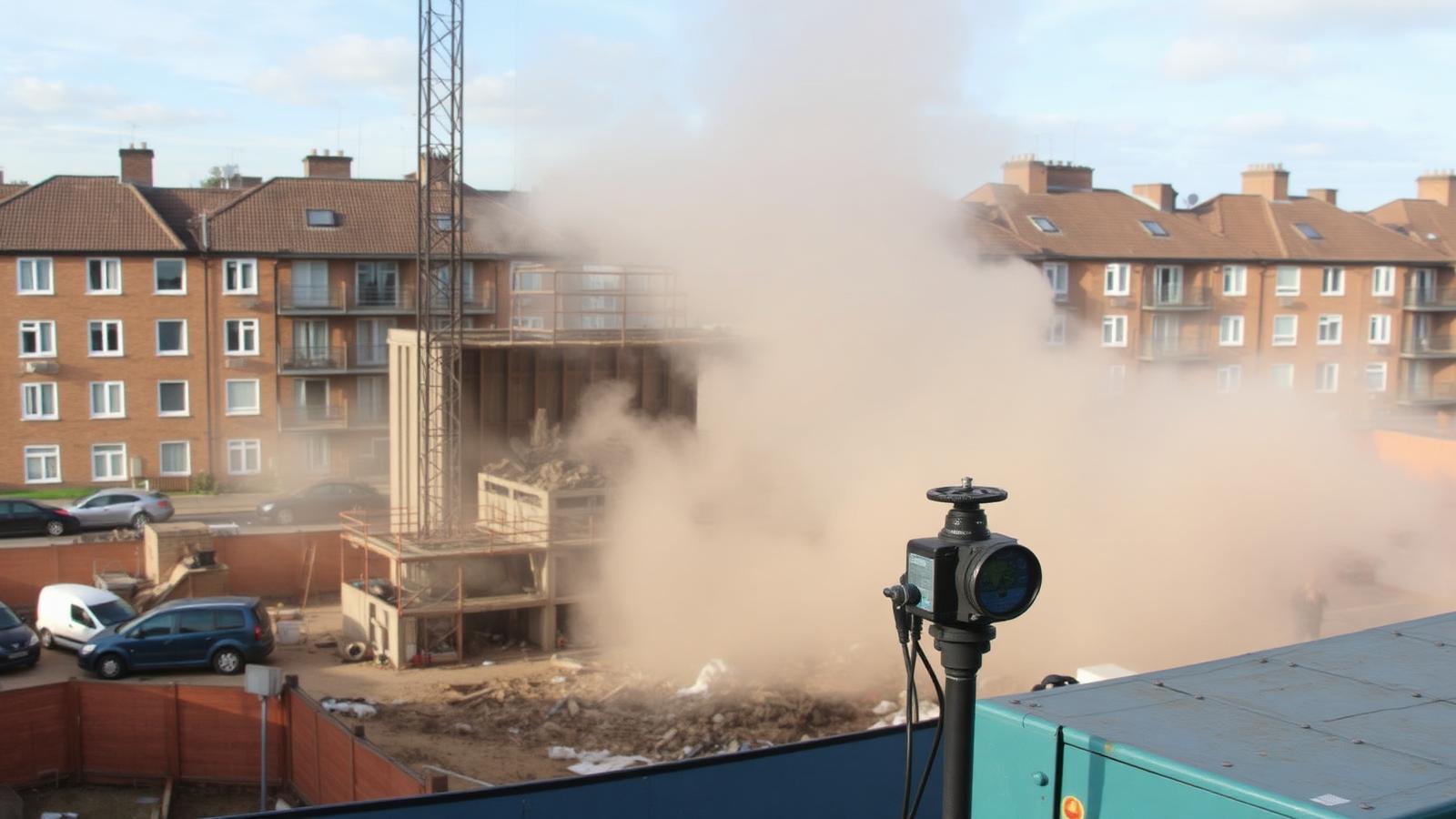
Commercial-building dust may mean deposits on desks, airborne particles, workplace exposure or construction ingress. Each needs different evidence. We define the dust type, pathway and decision before selecting instruments or samples, directing facilities, property and safety teams to the right assessment.
Established 1999 · 2,500+ assessments · SafeContractor approved · BOHS Affiliate Member · London & South East
Our Commercial Dust and Particulate Monitoring Services
Workplace Dust Assessment
Personal inhalable and respirable dust sampling for workplace exposure assessment under COSHH.
Learn moreOffice Dust Deposits
Measurement and characterisation of material accumulating on desks and commercial office surfaces.
Learn moreConstruction Impact Testing
Baseline and works-phase monitoring to protect occupied buildings during construction.
Learn morePM2.5 & PM10 Monitoring
Real-time airborne particulate monitoring for offices, including filtration and outdoor-ingress patterns.
Learn moreIndoor Particulate Investigation
Source-apportionment investigation for high or unexplained indoor particulate levels.
Learn moreWho uses commercial dust evidence?
Why This Matters
Deposits, airborne concentrations and personal exposure are different evidence. Defining the question prevents the wrong method being applied.
- Settled material can be characterised and its deposition tracked
- Real-time PM monitoring reveals patterns by time and activity
- Personal sampling assesses inhalable and respirable workplace exposure
- Baseline and works-phase monitoring can protect occupied premises
- Source investigation combines measurements with pathway evidence
Our Approach
We agree area, activity, timing and decision first. Direct-reading monitors show airborne change; gravimetric or personal samples provide mass evidence; surface samples characterise deposits. Results are linked to occupancy, outdoor conditions, ventilation and filtration, with methods and limitations stated.
Choose the dust service by question
| If you need to… | Page |
|---|---|
| Measure material accumulating on office desks and surfaces | Office Dust Deposits |
| Track airborne fine and coarse particulates in occupied offices | PM2.5 and PM10 Office Monitoring |
| Find the source of high or unexplained particulate readings | Indoor Particulate Investigation |
| Investigate an active complaint about dust settling in a building | Dust Complaint Investigation |
| Protect occupied areas during construction or refurbishment | Construction Impact on Buildings |
| Assess employee exposure to process dust under COSHH | Workplace Dust Assessment |
| Plan a broader substance-exposure programme | Hazardous Substances Monitoring |
| Measure emissions around a construction-site perimeter | Boundary Monitoring Services |
Swipe sideways to see the full table →
Settled dust, airborne particles and exposure
Settled-dust work examines what accumulates and returns after cleaning. PM monitoring records airborne size fractions but not every material. Occupational assessment follows workers and tasks, comparing personal samples with relevant HSE EH40 exposure limits. Source investigations may combine methods while keeping conclusions distinct.
Construction impact inside and outside the site
Construction Impact on Buildings uses baseline, internal monitoring, activity records and alerts to protect occupied premises. Boundary monitoring measures at a site's perimeter for project environmental controls. Their locations, responsibilities and reporting remain separate.
Is this the right page?
Use this hub when the type of dust evidence is not yet clear. For a wider commercial indoor air assessment that includes gases, comfort conditions or VOCs, start with Indoor Air Quality Testing.
Limitations and what this assessment cannot tell you
Dust results describe the stated fraction, locations, activities and monitoring period.
- PM readings do not identify chemical composition
- Surface deposits do not establish airborne exposure
- Static room monitoring does not replace personal COSHH sampling
- Source attribution may require comparison locations, activity records or laboratory characterisation
- Mechanical defects and remedial work are referred to the appropriate contractor
What a dust report records
- Question, building context and areas assessed
- Sampling fraction, instruments and laboratory methods
- Locations, duration, occupancy and activity observations
- Results with relevant comparison criteria
- Likely sources, pathways and evidence confidence
- Prioritised controls, investigation or verification steps
Related dust and particulate services
Frequently Asked Questions
Related dust and particulate services
Need Indoor Air Quality Testing?
Get a no-obligation quote. We provide IAQ testing, ventilation assessment and environmental monitoring across London and the South East.