VOC and Formaldehyde Testing
Independent indoor air quality assessors · Since 1999
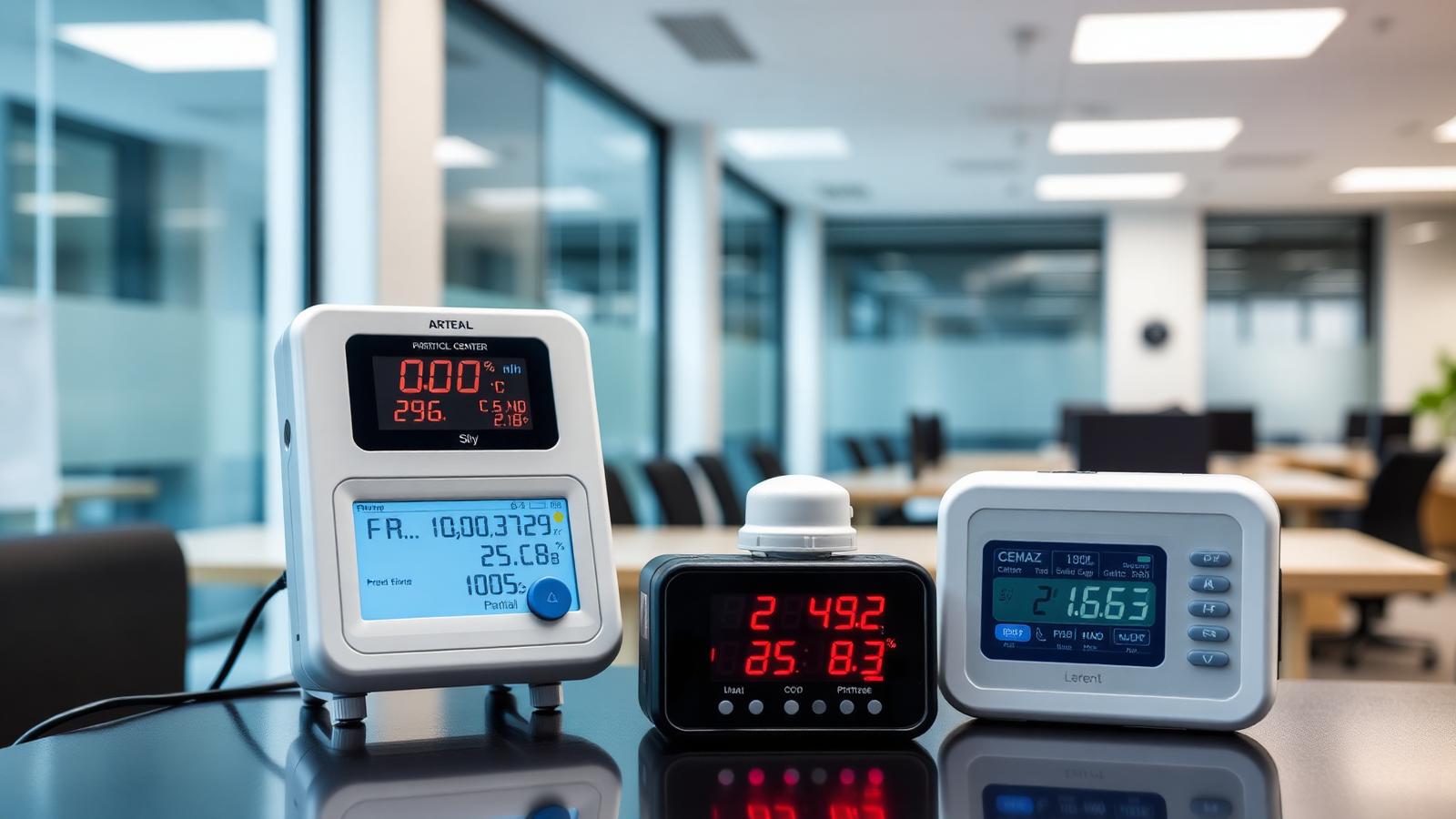
VOC and formaldehyde testing distinguishes broad real-time screening from compound-specific laboratory evidence. Green Air Monitoring selects the method around the question: locating a changing emission pattern, identifying individual volatile organic compounds, checking formaldehyde after fit-out, or testing against a project criterion. Recording materials, ventilation, occupancy and recent activities is essential because a result without that context cannot explain where an emission came from.
Established 1999 · 2,500+ assessments · SafeContractor approved · BOHS Affiliate Member · London & South East
Three different evidence routes
A direct-reading instrument can screen total volatile organic compounds, or TVOC, and show how the combined signal changes by room and time. It does not identify individual substances. Speciated VOC analysis draws air through thermal desorption tubes for laboratory analysis by gas chromatography–mass spectrometry, commonly GC-MS. That route identifies and quantifies compounds captured by the method. Formaldehyde requires a suitable dedicated sampling and laboratory method. The three routes answer different questions and may be combined where screening is used to target confirmatory samples.
| Method | Best use | Main limitation |
|---|---|---|
| Real-time TVOC screening | Finding patterns, peaks and contrasting locations | Does not identify individual VOCs |
| Thermal desorption and GC-MS | Identifying and quantifying speciated VOCs | Represents the defined sampling period and method range |
| Laboratory formaldehyde sampling | Quantifying formaldehyde for a focused concern or criterion | Requires controlled sampling information and laboratory turnaround |
Swipe sideways to see the full table →
Typical sources in commercial interiors
New flooring, paints, sealants, adhesives, composite-wood furniture and joinery can emit VOCs after installation. Cleaning products, air fresheners, printing, stored chemicals and maintenance activities may create shorter peaks during normal use. Source investigation considers material dates, product information, room temperature, ventilation operation and the timing of odours. Comparing an affected location with a suitable control area can help distinguish a local source from a broader fit-out or outdoor influence.
When to test
Post-fit-out testing can be planned after completion and conditioning, either for project assurance or against confirmed BREEAM or WELL criteria. Existing buildings may need testing when a persistent chemical odour, new furniture, a product change or recurring time-linked complaint points towards volatile emissions. Scheme testing follows the registered project criteria and required conditions. General source investigation is more flexible and can begin with real-time mapping before laboratory samples are placed.
Interpreting laboratory and screening results
We compare results with the framework relevant to the commission, which may include scheme criteria or the World Health Organization’s indoor air quality guidelines. The report distinguishes a TVOC screening signal from a laboratory concentration for a named compound. It also records sample duration, room state, ventilation and any activity likely to influence the result. Absence from one analytical method does not prove that every possible substance is absent; the selected method and laboratory scope are stated clearly.
Source control, flush-out and retesting
Where results point towards recent materials or an identifiable product, actions may include removing or isolating the source, reviewing product use and storage, increasing suitable ventilation, or allowing a managed flush-out period. The project or HVAC team controls mechanical settings. Retesting uses the same relevant method and comparable conditions so the change can be evaluated. We prioritise source control before relying on general masking or reassurance.
Limitations and what this assessment cannot tell you
- Real-time TVOC instruments screen a combined response and do not identify compounds
- Laboratory results cover the compounds, sampling period and analytical method stated
- Results depend on room condition, ventilation and recent activities
- Testing identifies evidence; building and product specialists may be needed for remedial design
What your report includes
- Reason for testing and suspected sources
- Materials, activities and ventilation context
- Sampling methods, media, locations and durations
- Real-time profiles and laboratory results kept distinct
- Comparison with the applicable scheme or guideline
- Source interpretation and confidence
- Flush-out, source-control and retest recommendations
Related indoor air quality services
Frequently Asked Questions
Need Indoor Air Quality Testing?
Get a no-obligation quote. We provide IAQ testing, ventilation assessment and environmental monitoring across London and the South East.