Air Quality Testing — Canary Wharf & Docklands
Independent air quality and ventilation assessors · Based in Bexley, Kent
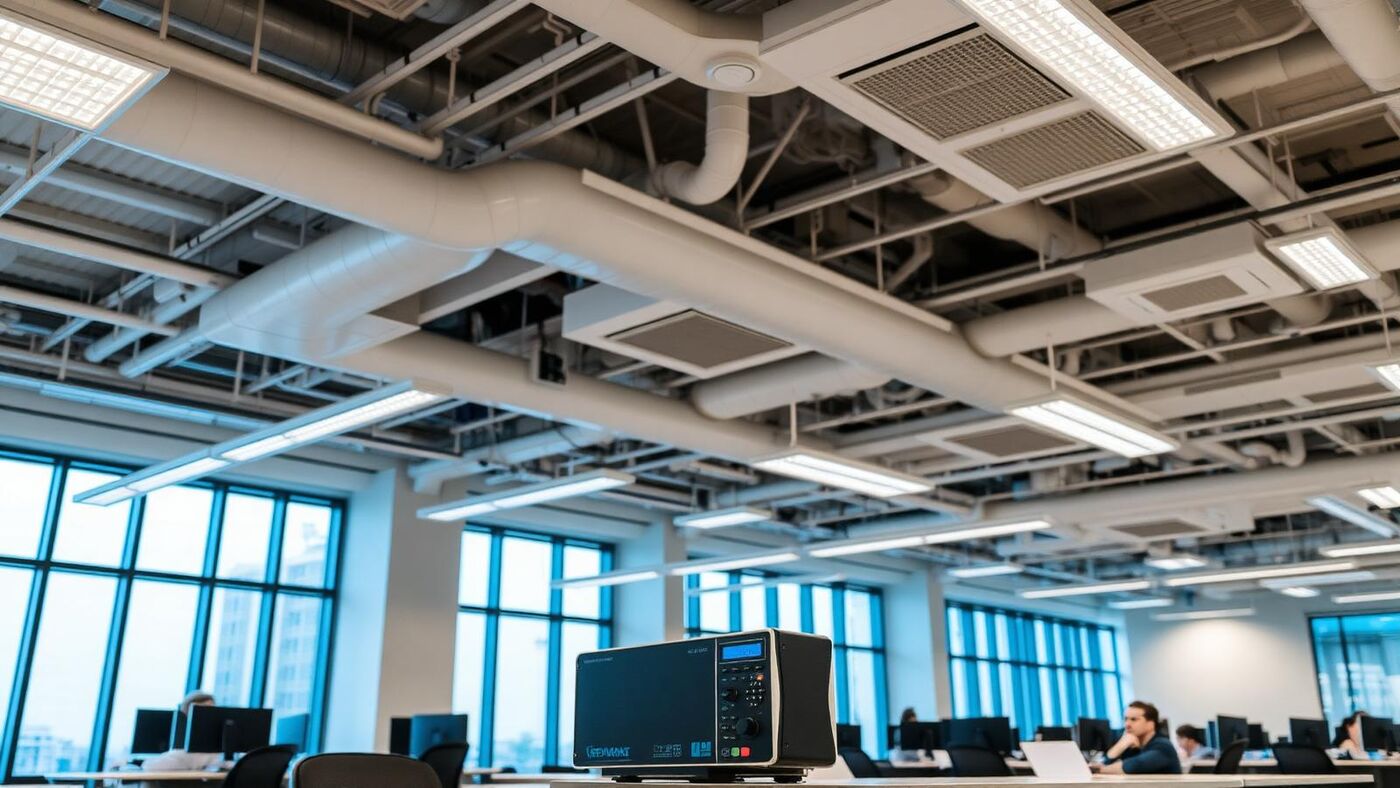
We provide indoor air quality and ventilation assessment for estate teams, facilities managers and commercial occupiers in Canary Wharf and Docklands. Sealed towers and broad floor plates rely on mechanical systems for almost every occupied condition, so an investigation must relate room measurements to occupancy, air-handling zones and operating schedules. Our independent reports help clients decide whether the issue lies with use, controls, hygiene, fit-out emissions or another identifiable source.
Established 1999 · 2,500+ assessments · SafeContractor approved · BOHS Affiliate Member · London & South East
Buildings and districts we cover
Coverage extends across Canary Wharf, the Isle of Dogs, Wood Wharf, Royal Docks and the Stratford edge. The area combines established office towers, new mixed-use districts, transport-connected campuses and continuing development. Estate-managed buildings may share access rules and performance expectations even when individual occupiers control their own floors. Large amenity areas, trading spaces and flexible offices create different occupancy profiles within the same mechanical system.
- Sealed high-rise offices with large AHUs and extensive duct networks
- Estate-managed campuses requiring consistent evidence across several buildings
- Deep floor plates where internal rooms have no direct natural ventilation
- New commercial space moving through fit-out, handover and early occupation
- High-occupancy meeting, trading and event areas with rapidly changing CO₂ loads
Local factors that affect indoor air and ventilation
High-rise envelopes limit casual window opening, making plant schedules, outside-air dampers and occupancy assumptions central to indoor conditions. Major development can contribute outdoor dust, while riverside weather and transport activity affect the background against which indoor readings are interpreted. Averages can conceal local CO₂ accumulation on large floors, and one sensor cannot represent separate meeting clusters or ventilation zones. New finishes may release VOCs after fit-out, while established duct systems require planned access for meaningful TR19 inspection.
- Complete dependence on mechanical outdoor-air supply in many towers
- CO₂ variation across large floor plates and densely occupied rooms
- Construction dust around expanding estates and transport infrastructure
- VOC and formaldehyde concerns during fit-out and initial occupation
- Complex landlord, estate and tenant responsibilities for access and controls
Most requested services in Canary Wharf and Docklands
The appropriate scope depends on the building, the question being investigated and the evidence already available. These are the services most often relevant to commercial premises in Canary Wharf and Docklands.
| Service | Typical reason in this area | More information |
|---|---|---|
| CO₂ and fresh-air assessment | Logging occupied zones to show whether outdoor-air provision keeps pace with changing occupancy. | View service |
| Multi-site IAQ monitoring | Using one method and dashboard-ready reporting across an estate or managed portfolio. | View service |
| TR19 Air assessment | Inspecting representative locations in large AHU and duct systems for hygiene evidence. | View service |
| IAQ compliance testing | WELL pre-testing and BREEAM-related indoor-air testing before formal submissions. | View service |
| Pre- and post-occupancy testing | Checking new or refurbished floors at the appropriate handover and occupation stages. | View service |
Swipe sideways to see the full table →
Designing representative high-rise monitoring
In a sealed tower, the main challenge is representing a large and layered system without mistaking one convenient sensor for the building. We map occupied neighbourhoods and meeting clusters to the available AHU and control information, then choose locations that test meaningful differences. CO₂ logging is paired with occupancy notes and outdoor readings; a rising trend can then be interpreted against actual room use rather than a nominal desk count. For TR19 work, the number and spread of inspection points reflect system size, duct layout and access, with at least three representative test locations per system and more for large or complex arrangements. Estate programmes can repeat this logic using common location codes and report fields. Where new fit-out is involved, VOC or formaldehyde testing is scheduled with the relevant ventilation and conditioning record. The resulting evidence helps an estate team compare zones and assets, while making clear that controls or mechanical faults must be investigated by the appointed HVAC contractor.
- Map rooms to ventilation zones before comparing high-rise results
- Use additional inspection points where floor plates or duct systems are large and complex
- Keep estate-wide reporting consistent without suppressing building-specific exceptions
How we work in Canary Wharf and Docklands
A Docklands commission starts with the estate rules as well as the technical scope. We identify floor zones, AHUs, occupancy periods, security requirements and equipment routes before leaving Bexley. The journey from DA5 is comparatively direct, but river crossings, estate checkpoints and booked loading facilities still need allowance. Out-of-hours attendance is available by arrangement for secure sites and continuously used workplaces, although CO₂ studies may need normal occupied periods to answer the question properly.
Enquiry
Describe the Canary Wharf or Docklands estate, affected zones, occupancies and reporting objective.
Scope
We select representative floors and rooms against AHU zoning, access records and available trend data.
Visit
We coordinate with estate security and can arrange non-standard attendance where the measurement method permits.
Report
Graphs, observations and system context are combined so local anomalies are not hidden by tower-wide averages.
Follow-up
We review actions with estate and tenant teams and can repeat measurements consistently across further assets.
Limitations
We agree the scope for each Canary Wharf and Docklands property before attendance so that the report provides a precise answer to the commissioning question based on measured evidence.
- CO₂ is an indicator of ventilation relative to occupancy, not a direct airflow measurement.
- Estate-wide conclusions require a sample designed to represent different buildings, floors and uses.
- Our WELL pre-testing prepares the project for formal verification by the appointed agent.
Services we deliver in Canary Wharf and Docklands
Frequently Asked Questions
Services we deliver in Canary Wharf and Docklands
Need Indoor Air Quality Testing?
Get a no-obligation quote. We provide IAQ testing, ventilation assessment and environmental monitoring across London and the South East.