
The UKs Warm Homes Plan aims to improve energy efficiency across the existing building stock (retrofit ventilation). Insulating and sealing buildings reduces heat loss, but it alters airflow, moisture movement and the behaviour of building systems. When ventilation is an afterthought a slow, invisible decline in indoor air quality (IAQ) can follow. Our team examines the principal risks created by retrofit work, practical controls that matter for occupants and operations, and the governance steps building owners should take to avoid long-term problems.
Warm Homes Plan retrofit: ventilation risks
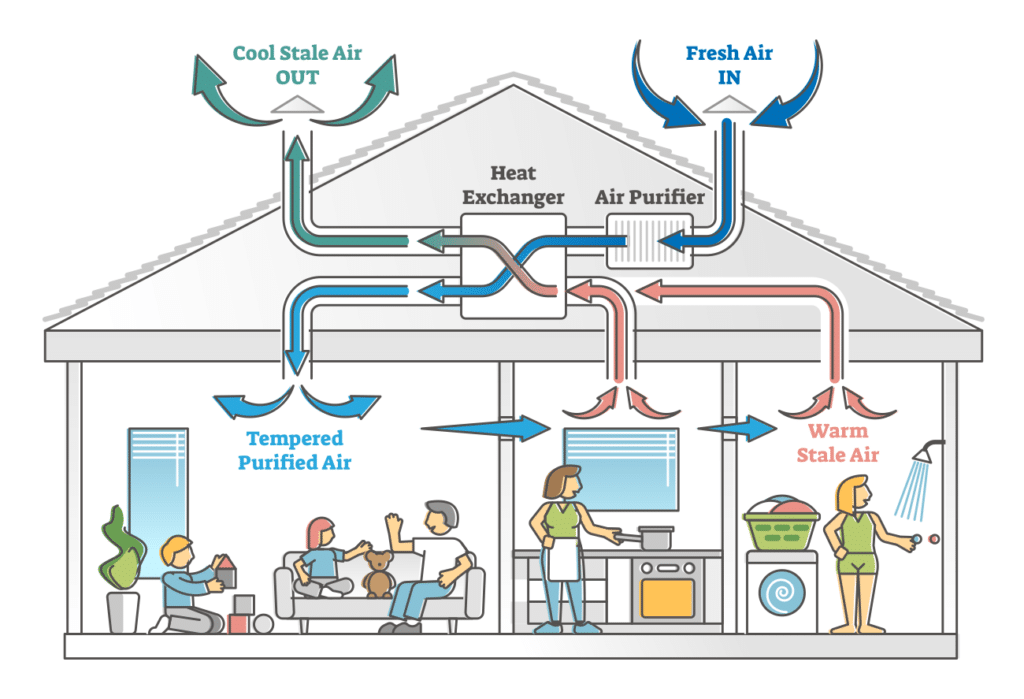
Retrofit measures that tighten the building envelope change how air and moisture move. The predictable risks are operational rather than dramatic:
- Reduced background ventilation - draught-proofing and sealed windows lower uncontrolled air change. Without compensating measures, CO2 and other occupant-generated pollutants rise.
- Moisture and condensation - insulation over cold bridging can change dew points in concealed spaces and create interstitial condensation, encouraging mould growth and fabric decay.
- Displaced pollutants - emissions from cooking, indoor combustion, building materials and stored chemicals may accumulate if extraction is impaired.
- Mechanical system interactions - retrofits can compromise mechanical extract or supply systems, unbalance balanced ventilation, or obscure access for maintenance.
- Ductwork and filter issues - changes in airflow and system downtime can increase dust loading in ducts; recognised guidance such as TR19 addresses ductwork cleanliness.
These are management issues rather than causes for alarm. Practical consequences include higher absenteeism, occupant complaints, increased cleaning or remediation costs, and reputational risk. Relevant regulatory and technical guidance includes Building Regulations Approved Document F for ventilation, HSE advice on water and building changes, and public health guidance from UKHSA on environmental controls. Our recommendation is to treat ventilation as an integral outcome of retrofit, not an optional add-on.
Practical ventilation and IAQ controls
Mitigation is straightforward where ventilation is considered early. The following controls are effective and proportionate:
- Whole-building ventilation strategy - define target ventilation rates, extraction for wet rooms and kitchens, and any mechanical ventilation with heat recovery (MVHR) requirements before works begin.
- Commissioning and verification - confirm performance after installation using objective methods. Simple CO2 monitoring gives a live indication of occupancy-related ventilation; for design verification use tracer-gas or calibrated air flow measurements.
- Maintainable systems and access - ensure extract fans, filters and ducts remain accessible for routine maintenance and cleaning. TR19 is a recognised technical reference for duct cleanliness and should inform cleaning intervals.
- Filtration and hygiene - specify appropriate filters for supplied air and provide a maintenance schedule. Retrofitted MVHR units must be commissioned and have a documented filter and cleaning regime.
- Moisture controls - maintain extraction in bathrooms and kitchens, consider humidity-linked controls, and review insulation placements to avoid cold bridges and interstitial condensation.
- Material selection and storage - choose low-emission materials and manage the storage and use of volatile substances during and after retrofit.
These technical measures reduce the probability of IAQ degradation and keep performance predictable. They also make ongoing monitoring and maintenance straightforward for facilities teams.
Managing retrofit risks over time
Long-term success requires governance and verification, not one-off fixes. Our team recommends embedding ventilation and IAQ requirements into procurement, handover and asset management processes:
- Include performance acceptance criteria - contracts should require measured ventilation performance and defined IAQ indicators at handover. CO2, relative humidity and particulate monitoring are practical operational metrics.
- Revisit risk assessments - building-wide changes warrant a fresh review of legionella and moisture risk assessments. HSE guidance emphasises reviewing control measures after significant alterations to services or fabric.
- Continuous or periodic monitoring - maintain a programme of spot checks or continuous monitoring depending on occupancy risk. Continuous data enables early detection of degradation and supports targeted maintenance.
- Planned maintenance and training - allocate budget and responsibilities for filter changes, fan servicing and duct inspections. Ensure estates staff understand ventilation system operation after retrofit work.
- Record-keeping and review - maintain commissioning records, filter schedules and monitoring logs to demonstrate duty of care and support long-term asset value.
Adopting these steps turns retrofit from a short-term energy intervention into a managed building upgrade that protects occupant health, comfort and operational value.
Key takeaways

- Thermal retrofit changes airflow and moisture; ventilation must be planned and verified as part of the works.
- Simple, evidence-based controls - whole-building strategy, commissioning, maintenance and monitoring - prevent most IAQ problems.
- Embed measurable acceptance criteria in contracts and update risk assessments after major works; HSE and UKHSA guidance remain relevant for hygiene and public-health considerations.
- Managing ventilation over time preserves occupant wellbeing, reduces complaints and supports building performance and value.