Hidden ductwork is a common, persistent risk in commercial buildings. Grease in kitchen extract, settled dust in general ventilation, and deposits in poorly accessed risers do not remain invisible in consequence. They create a slow-burning problem that affects fire risk, indoor air quality and the legal obligations of those responsible for a building.
Our team frames ventilation hygiene as an asset and risk-management task. Routine cleaning and inspection are not optional extras: they are part of the duty to assess and control hazards under the Regulatory Reform (Fire Safety) Order 2005 and feature in the expectations of insurers and competent authorities. This article explains why unseen ducts matter, how fire and insurance risk interact with hygiene, and what practical evidence managers should keep to demonstrate control.
Why unseen ducts matter
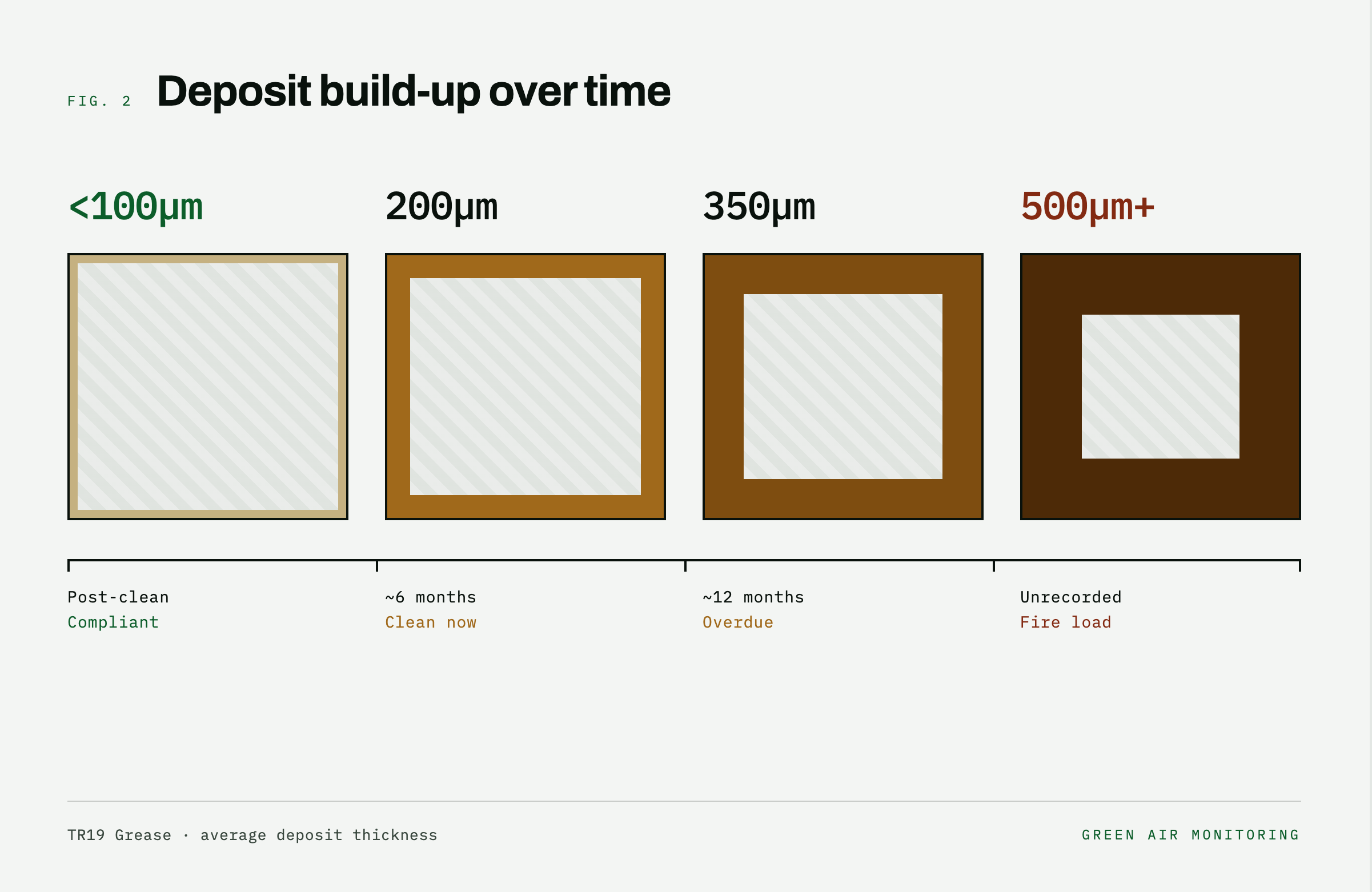
Accumulation of grease, cooking aerosols and ordinary dust is inevitable where extract or supply air moves through a system. These deposits change two things simultaneously:
- Combustibility - Kitchen grease is flammable and will ignite under the right conditions. Once a fire reaches a contaminated duct, it can spread rapidly between compartments and to rooftop plant.
- Air quality degradation - Settled particulate and residual cooking oils support microbiological growth, odour, and re-entrainment of contaminants into occupied spaces. This affects occupant comfort, increases complaints and can impair productivity.
Concealed ductwork also makes hazard detection and effective cleaning harder. Access is limited, visual inspection is infrequent, and cleaning without documented methods often leaves residues behind. Treating ventilation hygiene as a housekeeping checklist misses the systemic nature of the problem: ducts are part of the mechanical system that protects occupants and limits liability.
Fire risk and statutory duties
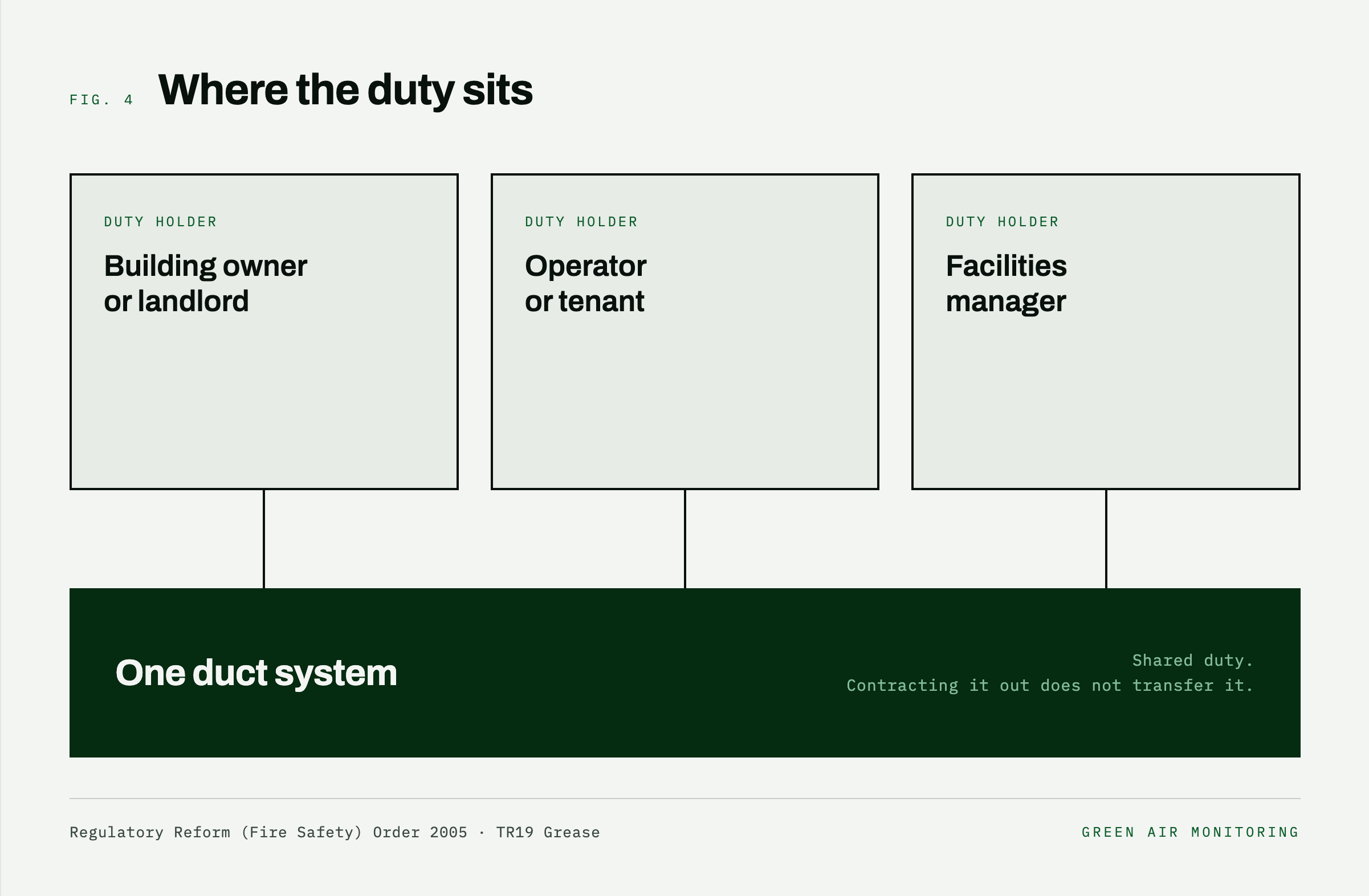
Fire risk from contaminated ducts, particularly kitchen extract systems, is a well-understood concern in fire safety management. The Regulatory Reform (Fire Safety) Order 2005 places responsibility on the "responsible person" to carry out fire risk assessments and implement appropriate preventive measures. Where ventilation systems are a credible pathway for fire spread, the duty to control that pathway is explicit.
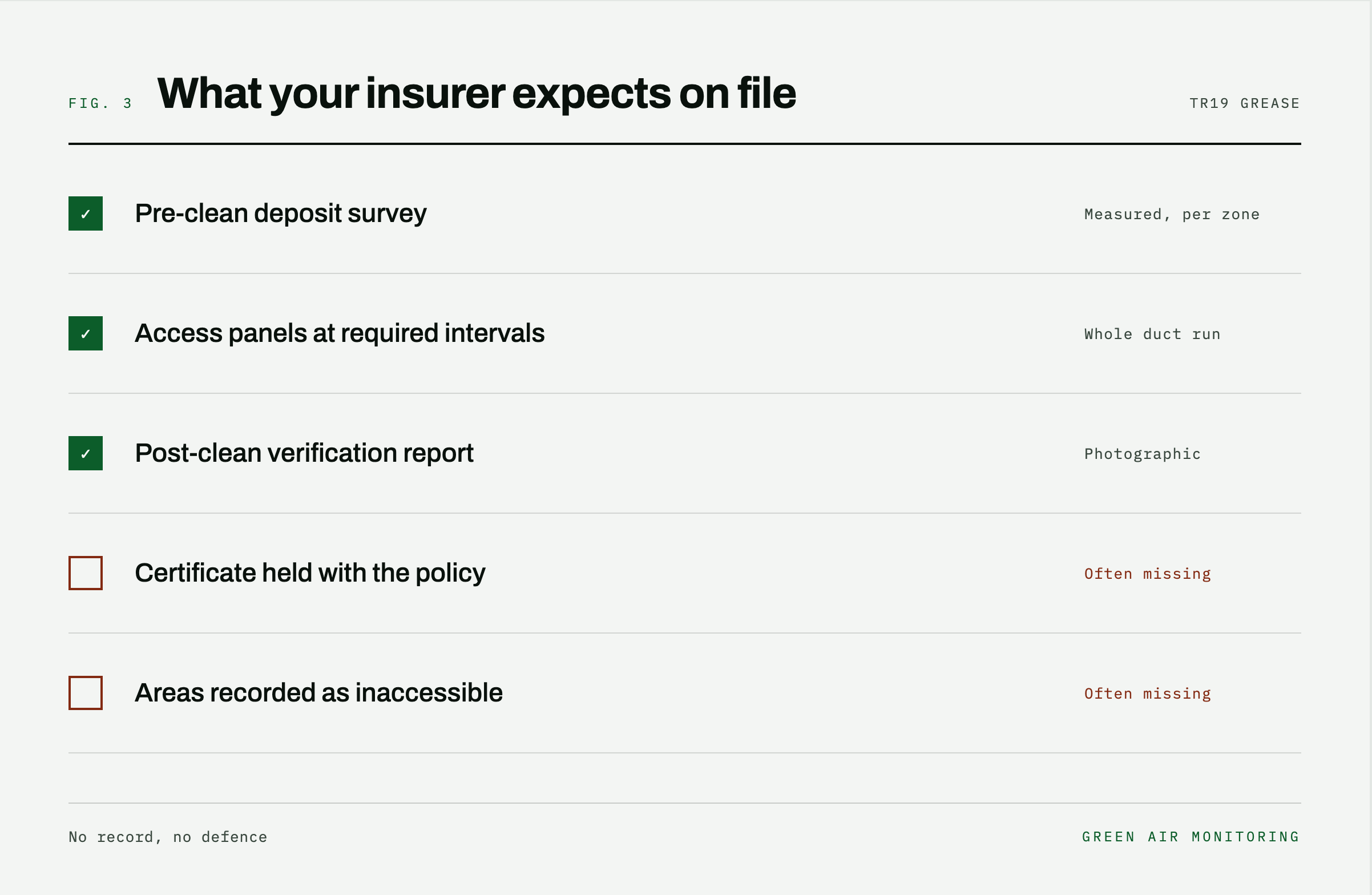
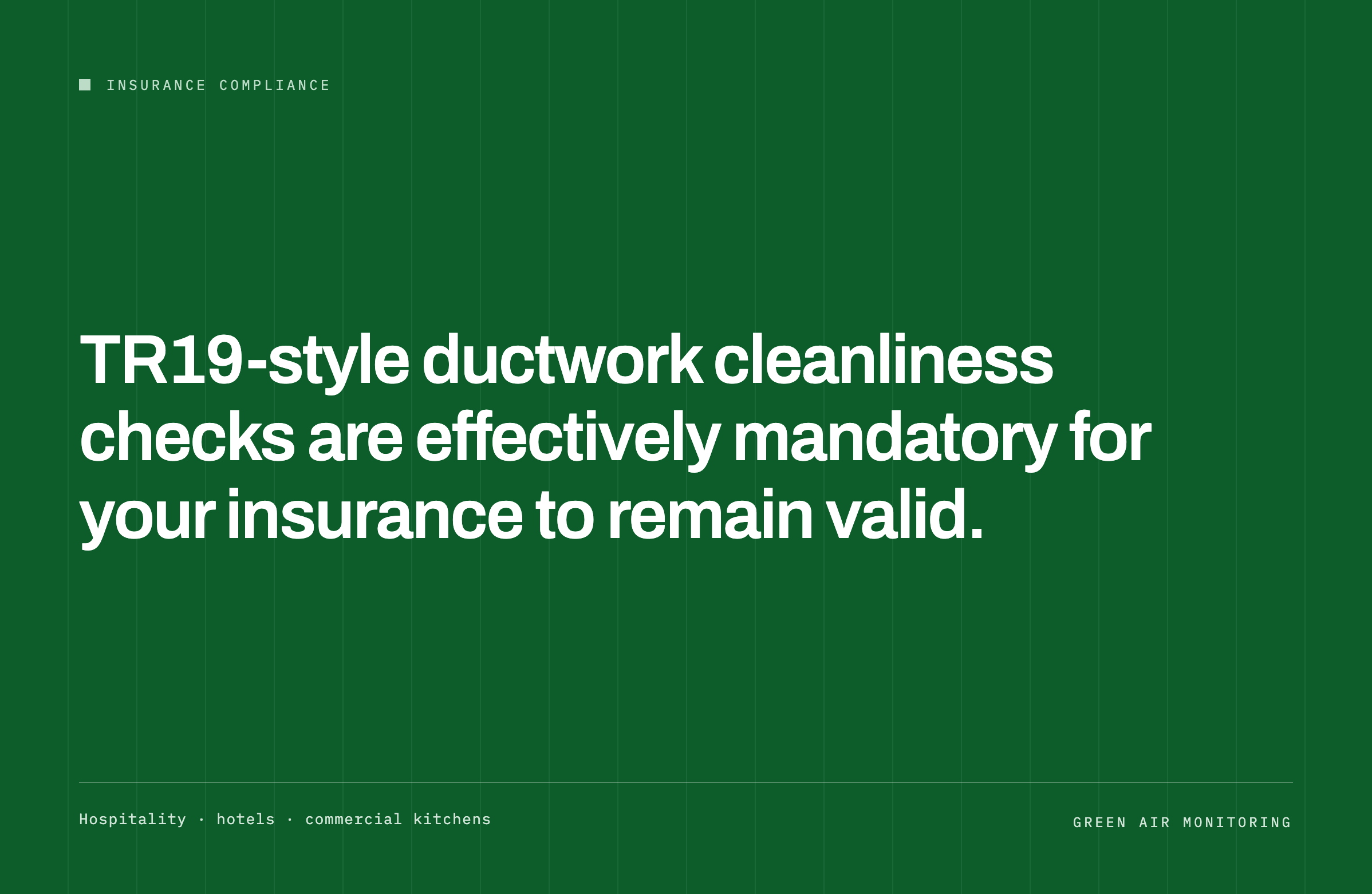
Insurers commonly require regular inspection and documented cleaning of kitchen extract and general ductwork as a condition of cover. Failure to keep records or to follow recognised guidance can complicate claims or lead to declined liability when a loss is linked to poor maintenance. Industry practice often refers to TR19-style inspection and cleaning regimes for kitchen extract systems; such guidance informs reasonable expectations for frequency and competence.
HSE guidance also makes clear that maintenance and cleaning of engineering controls are part of managing workplace risks. Our experience is that treating ductwork hygiene as part of a formal fire safety plan reduces uncertainty during inspections and strengthens the case for coverage with insurers.
Practical controls and evidence
Risk control requires both action and records. Practical steps our team recommends for a defensible ventilation-hygiene regime include:
- Risk-based inspection schedule - Classify systems by use and contamination potential. Kitchen extract in a high-volume restaurant requires more frequent checks than a lightly used office supply duct. Use TR19-style criteria where applicable.
- Competent cleaning - Engage operatives with proven competence in ductwork cleaning, and require a written method statement for each system type. BOHS and other industry bodies provide competence pathways that can be used to specify contractors.
- Access and verification - Ensure physical access points and use CCTV or borescope inspection to verify internal cleanliness. Photographic evidence before and after cleaning is essential.
- Documented outcomes - Keep cleaning certificates, invoices, inspection reports and risk assessments together with the building fire-safety record. Ensure records show who instructed the work and why the frequency was chosen.
- Integration with PPM - Make ventilation hygiene part of the planned preventive maintenance regime rather than an ad hoc task. Link actions to fire-safety reviews and to maintenance checks on extraction fans and dampers.
When a loss occurs, investigators and insurers will look for evidence that reasonable steps were taken. A paper trail demonstrating risk assessment, competent cleaning, and verification is often decisive.
Key takeaways
- Hidden ductwork is both a fire pathway and a contributor to poor indoor air quality; it requires system-level management, not ad hoc cleaning.
- Legal duties under the Regulatory Reform (Fire Safety) Order 2005 and expectations from insurers make ventilation hygiene a compliance issue.
- Use risk-based inspection schedules and TR19-style guidance where applicable to set cleaning frequency and scope.
- Require competent contractors, photographic verification and written records for every cleaning and inspection.
- Integrate ventilation hygiene into planned preventive maintenance and fire-safety documentation to reduce liability and protect occupants.
- Maintaining visible evidence of control is as important as the cleaning itself when defending fire or insurance claims.