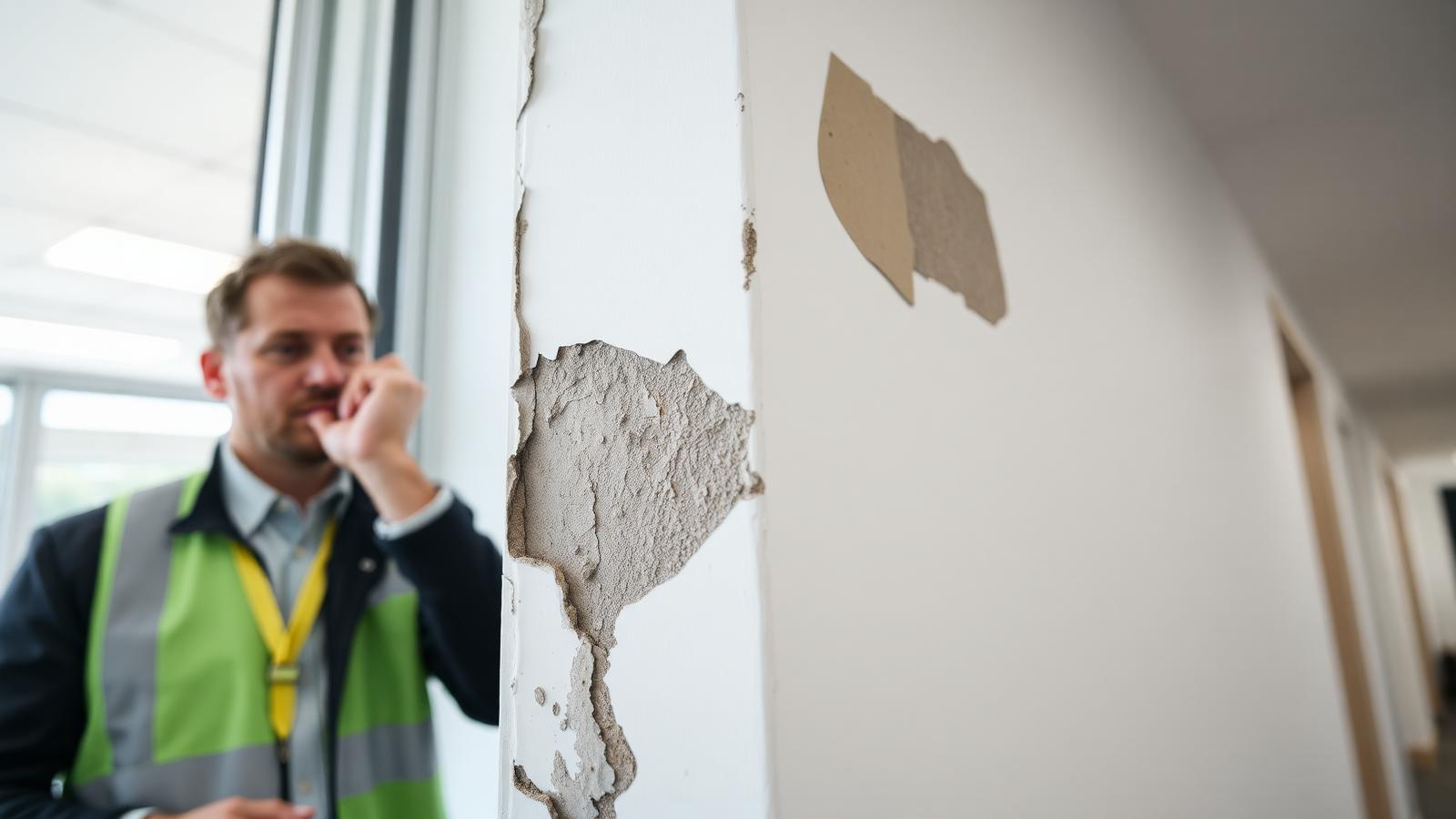
Office Mould Investigation
Independent indoor air quality assessors · Since 1999
Visible staining, a musty odour or suspected concealed growth can disrupt confidence in an office or commercial space. Our investigation establishes what is present, where moisture is coming from and what work is justified. We inspect the affected area in its building context, map moisture conditions and use sampling only when it adds useful evidence. Green Air Monitoring is independent of remediation contractors, giving the client a clear basis for commissioning and checking corrective work.
Established 1999 · 2,500+ assessments · SafeContractor approved · BOHS Affiliate Member · London & South East
Starting with the building history
The investigation starts before instruments are used. We ask when the issue appeared, whether it follows rainfall or seasonal changes, how the space is occupied, what plumbing or building work has occurred and whether cleaning or treatment has already been attempted. Floor plans, photographs, maintenance records and staff observations help define the likely pathways. This history guides the inspection towards affected finishes, adjoining rooms, risers, façades, roof zones, plumbing routes and relevant ventilation plant.
Inspection and extent mapping
We record visible growth, staining, damaged finishes, condensation marks and odours across the agreed area. Affected and apparently unaffected comparison locations are selected so that the client can understand distribution rather than a single isolated patch. The survey considers furniture positions, external walls, ceiling void access, service penetrations, floor interfaces and air movement. Photographs and plans create an auditable condition record for facilities teams and contractors.
Following the moisture source
Moisture meters support a pattern-based assessment across comparable materials. Surface temperature, room temperature and relative humidity help examine condensation potential, while longer logging may be proposed where conditions vary by occupancy, weather or plant schedule. Leak indicators and fabric defects are referred to the relevant building professional for confirmation and repair. A dry reading during one visit does not erase a credible earlier wetting event, so material condition and history remain part of interpretation.
Sampling where it changes the decision
Surface tape lifts or swabs may characterise suspected growth, distinguish microbial material from staining, or document an area before remediation. Air samples can be useful where growth is concealed, distribution is uncertain or a comparative airborne question has been defined. Suitable outdoor or unaffected-area samples provide context. Sampling is not added automatically: a laboratory name without inspection evidence cannot reveal the moisture pathway or define the whole affected extent.
A scope contractors can use
The report separates source correction from mould remediation. It identifies affected materials, accessible extent, likely concealed interfaces, removal or cleaning considerations, drying needs, containment considerations and areas requiring further access. Repairs to roofs, façades, plumbing or HVAC systems are assigned to the appropriate discipline. This gives the appointed remediation contractor a reasoned scope while allowing methods and site controls to be developed for the building.
Checking recurrence risk
Successful removal will not last if water entry, retained moisture or condensation continues. Recommendations therefore address the condition supporting growth, not just the visible surface. Depending on the evidence, this may involve repair, controlled drying, furniture clearance from cold surfaces, operating review, HVAC attention or environmental logging. Follow-up can be staged so source repair is checked before finishes are reinstated and final verification is carried out after cleaning.
Is this the right page?
Choose this service for a current visible or suspected mould issue needing cause and extent investigation. If treatment has already finished, Post-Remediation Verification is the correct independent check. For broader bacteria and fungi questions without a defined visible growth area, use IAQ Microbial Assessment.
Limitations and what this assessment cannot tell you
The investigation characterises accessible conditions within the commissioned scope.
- Concealed contamination may require access opened safely by the responsible contractor
- Moisture instruments support diagnosis but do not identify every construction defect
- Air samples are time-specific and cannot map all hidden growth
- Health symptoms require assessment by an appropriate medical professional
- The survey specifies environmental actions; it does not perform repair or remediation
What the investigation report provides
- Issue history and affected-area plan
- Photographic inspection and material-condition record
- Moisture patterns and condensation evidence
- Targeted sample results with contextual interpretation
- Cause and extent conclusions with stated confidence
- Prioritised source repairs, remediation scope and verification points
Related mould and microbial services
Frequently Asked Questions
Need Indoor Air Quality Testing?
Get a no-obligation quote. We provide IAQ testing, ventilation assessment and environmental monitoring across London and the South East.